
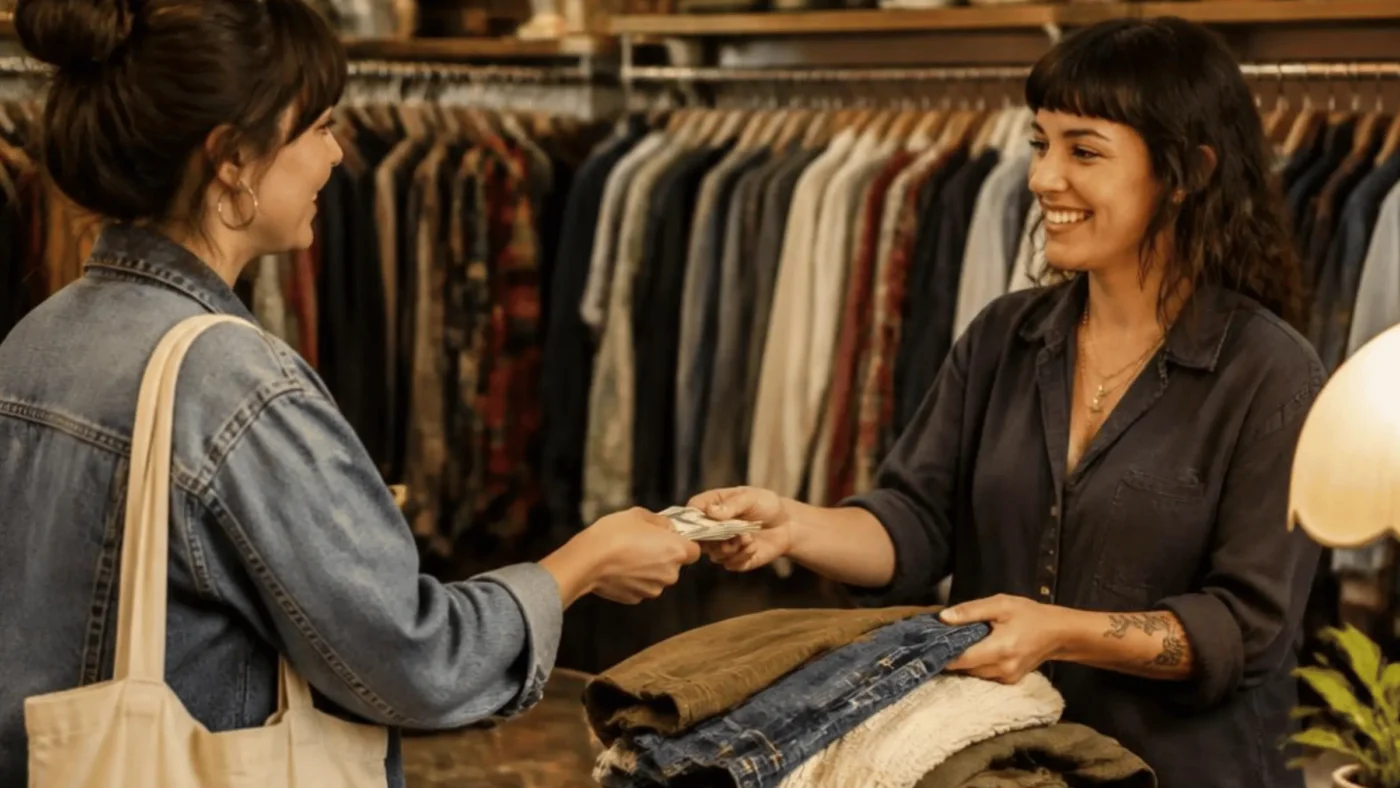
If you’re asking Where Can I Sell My Clothes for Cash Near Me, start with local buy-sell-trade clothing stores rather than donation-only thrift shops. Several U.S. resale chains evaluate clothing in person and pay for accepted pieces the same day. Your strongest option depends on the type of clothing you have, its condition, your brands, and which stores operate near your ZIP code. Selling things you already own is one of the lower-risk moves in Readisave’s guide to finding money urgently, so it is a sensible place to begin if this cleanout is part of a wider cash squeeze.
If you want cash today, start with a local buy-sell-trade chain such as Plato’s Closet, Uptown Cheapskate, Buffalo Exchange, Crossroads Trading, Clothes Mentor, or Style Encore. These stores review items in person, and many pay for accepted pieces the same day. Use each chain’s locator first because buying hours and inventory needs vary by location.
| Place to sell | Good fit for | How you can get paid | What to know before going |
| Plato’s Closet | Teen and young-adult clothing, shoes, accessories | Cash on the spot | No appointment under its national policy; stores focus on current styles. |
| Uptown Cheapskate | Current name-brand fashion and accessories | Immediate cash or higher store credit | Bring a valid government-issued ID. |
| Buffalo Exchange | Current fashion, vintage, shoes, accessories | 25% of the selling price in cash or 50% in trade | Government-issued ID required |
| Crossroads Trading | Current men’s and women’s fashion, premium pieces | 25% to 40% of its selling price in cash or 45% in trade | Valid photo ID; age rules apply |
| Clothes Mentor | Women’s clothing, handbags, shoes, accessories | Cash or store credit after review | Buying policies can differ by individual store. |
| Style Encore | Women’s and, at select stores, men’s styles | Cash for accepted items | The national page says no appointment is needed. |
| Independent resale boutique | Local or niche brands, vintage, designer pieces | Cash purchase or consignment, depending on store | Call first because policies vary widely. |
The national policies above make one point clear: a resale store is different from a donation center. Plato’s Closet, for example, says it buys gently used teen and young-adult clothing and pays cash for accepted items without requiring an appointment. Buffalo Exchange and Crossroads also advertise same-day in-store selling, and they publish their payout structures more openly.
Where Can I Sell My Clothes for Cash Near Me? Start With These 7 Options
1. Plato’s Closet for teen and young-adult styles
Plato’s Closet is a practical first stop if your closet contains current teen or young-adult brands, athletic wear, shoes, and accessories. Its national selling page says sellers can bring gently used items without an appointment, have them reviewed, and receive cash if they accept the offer. Because each franchise is independently operated, check the nearest location before packing the car.
The store publicly lists brands such as Aerie, American Eagle, Aritzia, Levi’s, Lululemon, Nike, Patagonia, Urban Outfitters, and Zara among the examples of brands it buys. Brand alone does not guarantee an offer because condition, style, demand, and local inventory still matter. Freshly cleaned pieces that look current are more likely to make sense for a resale buyer than worn or dated basics.
2. Uptown Cheapskate for current name-brand fashion
Uptown Cheapskate buys current clothing, footwear, and accessories and offers immediate cash for accepted pieces. Its national guide says sellers should bring clean items in good condition along with a valid government-issued ID, and an appointment is not required. Sellers can also choose store credit valued at 25% more than the cash offer.
This option works well if your closet includes brands such as Adidas, Anthropologie, Athleta, Coach, Free People, Levi’s, Lululemon, Madewell, Nike, Reformation, Vuori, or Zara. The company also advises sellers to consider season, condition, and current demand before visiting. Checking your location’s “in demand” section can help you decide what to bring.
3. Buffalo Exchange if you want a clear cash-or-trade formula
Buffalo Exchange gives sellers one of the clearest published payout formulas among major resale chains. For accepted items, its current selling page states that sellers receive 25% of Buffalo Exchange’s selling price in cash or 50% in store trade. The company buys during store hours without requiring an appointment, although you need valid government-issued identification.
Buffalo Exchange considers clothing and accessories and highlights current fashion, vintage pieces, elevated basics, designer goods, shoes, and accessories. Sellers under 18 must bring an adult who has valid identification. Since selection depends on the buyer and local demand, a full bag may result in only some of its items being purchased.
4. Crossroads Trading for current fashion and higher-value pieces
Crossroads Trading buys men’s and women’s current clothing and accessories at its U.S. locations. In-store sellers can receive cash or trade after evaluation, and the company currently offers a cash payout of 25% to 40% of the price it assigns the item for resale. Its trade payout is 45% of that store price.
Crossroads can be particularly useful if your wardrobe mixes ordinary contemporary fashion with premium pieces. It also offers consignment for qualifying higher-end designer items, where cash payouts can reach higher percentages after an item sells. If there is no Crossroads store nearby, its mail-in program currently offers prepaid shipping and cash payment through Zelle for purchased items.
5. Clothes Mentor for women’s clothing and accessories
Clothes Mentor focuses on women’s resale and says it considers gently used clothing in sizes 0–26, along with handbags, shoes, and accessories. You can be paid in cash for accepted items rather than waiting for a traditional consignment sale. Its national store locator also says buyers make offers on approved items at local stores.
Local rules deserve extra attention with this chain because franchise needs can differ. One individual location, for example, currently states that it is buying by appointment even though national guidance describes a broader walk-in model. Verify your local store’s buying hours, item limits, and appointment policy before leaving home.
6. Style Encore for adult wardrobes
Style Encore buys gently used clothing, shoes, handbags, outerwear, jewelry, and accessories. Its current national page says it pays cash for selected items and does not require an appointment under its standard selling process. The chain now lists both women’s and men’s items, although men’s buying is available only at select stores.
This can make Style Encore a better match than a youth-focused store when your closet contains office clothing, adult casual wear, handbags, or established fashion labels. Its brand examples range from Ann Taylor and Banana Republic to Lululemon, Patagonia, Gucci, and Louis Vuitton. Individual stores decide what they need, so an eligible brand can still be declined.
7. Independent resale and consignment stores in your city
Local resale boutiques can be worth checking when the national chains do not match your wardrobe. Some independent stores buy clothing outright, while traditional consignment shops generally pay only after the item sells. Vintage specialists may also value items that trend-focused mall resale stores would reject.
Search your city or ZIP code for “buy sell trade clothing,” “cash for clothes,” or “resale clothing store,” then call the promising results. Ask whether they buy outright, what categories they need, whether an appointment is required, and when payment happens. Those four questions can prevent you from carrying several bags into a shop that only accepts donations or consignment.
How Much Cash Can You Get for Used Clothes?

There is no single national rate for every resale chain, so avoid assuming that a $100 retail shirt will produce a fixed payout. Buffalo Exchange currently publishes a 25% cash share of its own selling price, while Crossroads publishes a 25% to 40% cash range based on its resale price. Uptown Cheapskate does not publish one universal cash percentage on its national guide but says store credit is worth 25% more than the cash value offered.
That difference matters because resale stores first decide what they believe an item can sell for, not what you originally paid. A nearly new premium jacket may produce a stronger offer than several ordinary shirts, while damaged or dated pieces may receive no offer. If maximizing money matters more than speed, compare an in-store cash offer with the likely net proceeds from selling the item yourself online.
How to Increase the Chance That a Store Buys Your Clothes
Condition is one of the few parts of the process you control before arriving. Wash or clean items as appropriate, remove lint, empty pockets, check zippers and buttons, and leave anything with strong odors or obvious damage at home. The major resale chains repeatedly state that they seek clean, stylish pieces in good condition.
A simple three-pile system can also save time and may increase the value of your closet cleanout:
- Local resale pile: current, clean, in-demand brands that fit a nearby store’s buying profile.
- Sell-yourself pile: designer, niche, collectible, or higher-value items that may justify photographing and listing individually.
- Donate or recycle pile: wearable pieces that buyers reject, plus items that are unlikely to justify the time required to sell.
Take the first pile to the store that most closely matches its style rather than bringing the same mixed bag everywhere. Keep the second pile for online or specialty buyers, where you can control the asking price. This approach separates the items that favor speed from the items where waiting may produce more money.
Do Regular Thrift Stores Pay Cash for Clothes?
Many thrift stores do not buy clothing from individuals because their inventory comes from donations. A charity thrift store may happily accept your bag but give you no cash in return, while a buy-sell-trade store evaluates items for purchase. That distinction is why checking the store’s “sell to us” page matters before you make the trip.
Consignment stores are another category and usually work differently from immediate-cash buyers. They may display your item first and pay your share after it sells, which can take days, weeks, or longer. If the goal is money today, ask specifically whether the store offers outright purchase and same-day payment.
Finding the Closest Cash Buyer Today
Start by opening two or three official store locators and entering your ZIP code rather than driving to the first thrift shop shown in a map search. Then check the location’s buy hours, accepted categories, identification requirements, and any item limits. A five-minute call is especially useful for independent shops and franchise locations where policies may differ from the national website.
If this closet cleanout is part of a larger short-term money problem, that same urgent-money guidance recommends weighing lower-cost options before taking on credit. You can also browse the Readisave Manage Money section for broader money-management topics or review its Insufficient Funds guide if you want to compare a separate online side-income option.
What Should You Do With Clothes a Store Rejects?
A rejection does not automatically mean the clothing has no resale value. The store may already have too much of that category, the piece may not fit its target customer, or the local buyer may be seeking another season. Try one other buyer that serves a different audience before assuming the item cannot sell.
Higher-value rejected pieces may be worth listing directly through an online marketplace, while inexpensive basics often make more sense as a bundle or donation. Damaged textiles that are unsuitable to wear should go to a textile-recycling option where one exists. The goal is to match each piece with a selling method that makes sense for both its value and the time you are willing to spend.
Turn Your Closet Cleanout Into Cash
The fastest practical next step is to choose the two nearby buyers that match your clothing, check their current buying rules, and take your strongest pieces in first. Bring identification when required and do not assume every branch follows identical hours or inventory needs. If one store passes on a good piece, try a buyer with a different customer profile before moving it to your donation pile.
Selling used clothes will not turn every closet into a major payday, but it can convert unused items into money without taking on debt. Focus on condition, demand, and the right buyer rather than the original retail price. A targeted bag of current pieces is usually a better starting point than bringing everything you own and hoping a buyer sorts it out.
Frequently Asked Questions
Start with buy-sell-trade stores such as Plato’s Closet, Uptown Cheapskate, Buffalo Exchange, Crossroads Trading, Clothes Mentor, and Style Encore. All advertise cash purchasing for accepted clothing under their standard selling programs, although local availability and rules differ. Search each official locator with your ZIP code and confirm buying hours before visiting.
Several major chains say no appointment is required under their national policies, including Plato’s Closet, Buffalo Exchange, Crossroads Trading, Uptown Cheapskate, and Style Encore. Individual franchise locations can still have different buying procedures or temporary restrictions. Calling ahead is a sensible move when you have a long drive or several bags to bring.
Clean pieces in strong condition, current styles, and brands that fit the store’s customer base generally have the strongest chance. Resale buyers also consider local demand and current inventory, so acceptance can change even for the same brand. Review the store’s current buying guide before deciding what belongs in your resale pile.
Selling locally usually requires less work because you can bring multiple pieces to one buyer without creating individual listings or arranging shipping. The tradeoff is that the store must leave room to resell the item, so you give up some control over the price. If speed matters most, start locally; if maximizing the return on a valuable piece matters more, compare other selling methods before accepting an offer.

